Sofia Jenkins · 13 September 2026
Southern Italian Agriculture Adapts to EU Green Deal Requirements via Cooperatives and Precision Technology
Italy's southern regions including Puglia, Sicily, and Calabria have faced mounting pressure to meet the European Union's Green Deal targets for reduced pesticide use, lower emissions, and enhanced biodiversity since the policy framework gained momentum in 2020. Data from the European Commission indicates these areas account for a significant portion of the country's agricultural output, with olive oil, wine, and citrus production forming key economic drivers that must now align with stricter environmental standards.
Farmers across these territories have turned to cooperative structures to share resources and distribute the costs associated with compliance. Cooperatives in Puglia, for instance, pool funds for soil testing equipment and water management systems that individual smallholders could not afford alone. This collective approach allows participants to meet the Green Deal's 50 percent pesticide reduction goal by 2030 while maintaining yields that support local economies.
Cooperative Models Driving Collective Compliance
Observers note that southern Italy's cooperative tradition dates back decades yet has evolved to address contemporary regulatory demands. Groups such as those operating in the Salento peninsula coordinate joint purchases of organic fertilizers and coordinate crop rotation schedules that improve soil health across multiple holdings. Research from Italian agricultural institutes shows these networks reduce per-farm input costs by up to 30 percent in some cases, freeing capital for other sustainability measures.
September 2026 marks a scheduled review point for several Green Deal agricultural provisions, when updated emissions data and biodiversity metrics will determine whether regions qualify for additional EU funding streams. Cooperatives in Sicily have already begun compiling shared datasets on water usage and carbon sequestration to prepare for that milestone, using standardized reporting templates developed in partnership with regional authorities.
Technology Integration Accelerates Sustainable Shifts
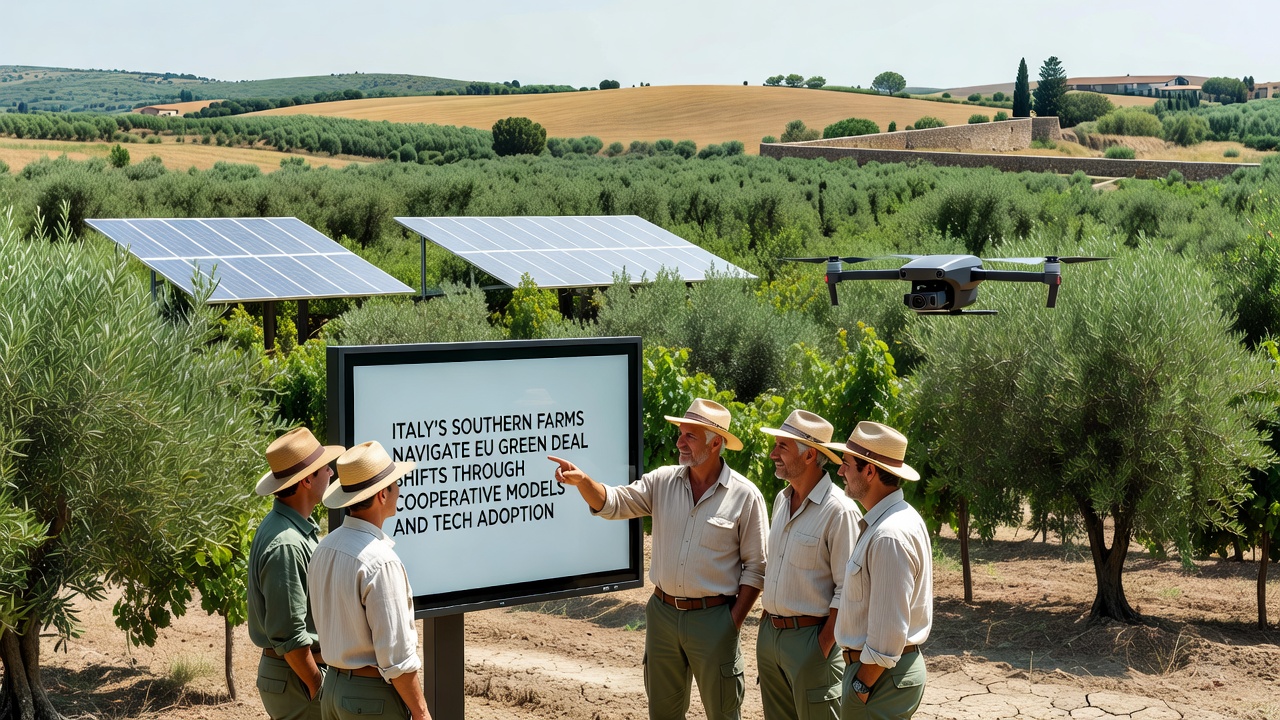
Precision agriculture tools have entered southern farms through cooperative leasing programs and government-backed pilot projects. Drones equipped with multispectral cameras map vineyard health in real time, enabling targeted interventions that cut chemical applications by measurable margins. Satellite imagery combined with ground sensors helps citrus growers in Calabria optimize irrigation schedules, addressing both drought risks and the Green Deal's water efficiency objectives.
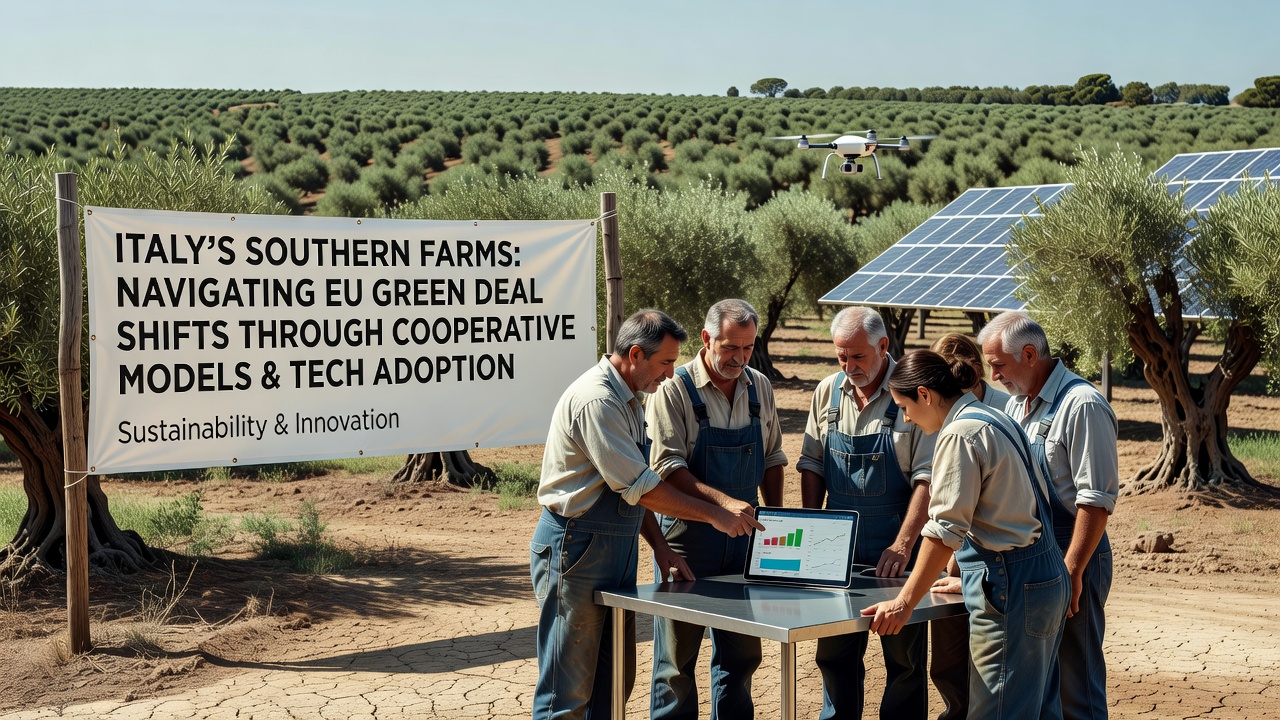
Studies conducted by European research consortia reveal that farms adopting variable-rate fertilization systems achieve nitrogen runoff reductions of 20 to 25 percent compared with traditional methods. In Puglia, several cooperatives now operate centralized data platforms where members upload sensor readings, allowing collective analysis that identifies regional patterns and informs broader land management strategies. These platforms also facilitate access to EU subsidies tied to verifiable sustainability metrics.
Regional Examples and Implementation Patterns
Take the case of a consortium near Bari that integrated automated weeding robots across member olive groves. The machines, financed through pooled loans, operate on schedules aligned with peak growth periods and have decreased herbicide reliance while preserving beneficial insect populations. Similar initiatives in Sicily incorporate solar-powered monitoring stations that track microclimate variations, supporting decisions that protect against both extreme weather and regulatory non-compliance.
According to figures released by the Food and Agriculture Organization of the United Nations, Italy's southern agricultural sector has seen a 15 percent increase in certified organic acreage between 2021 and 2025, with cooperatives accounting for the majority of new registrations. These certifications align directly with Green Deal biodiversity targets and open premium export markets that reward verified environmental practices.
Yet challenges persist. Smaller operations sometimes struggle with the initial learning curve required to operate drone fleets or interpret sensor data, prompting cooperatives to establish training centers staffed by agronomists. These centers run seasonal workshops covering everything from software interfaces to regulatory documentation, ensuring members meet reporting deadlines without external consultants.
Looking Ahead to Policy Milestones
As September 2026 approaches, southern cooperatives continue refining their technological infrastructure to capture the full range of available incentives. Data integration across multiple farms enables more accurate forecasting of yield impacts under reduced-input scenarios, giving planners clearer pictures of long-term viability. Industry reports from the Organisation for Economic Co-operation and Development highlight that regions with strong cooperative frameworks demonstrate faster uptake of these tools than areas relying on individual farm decisions.
External funding mechanisms, including those administered through Italy's National Recovery and Resilience Plan, have directed resources toward digital infrastructure in agriculture. This support has allowed cooperatives to install broadband connections in previously underserved rural zones, creating the connectivity backbone necessary for real-time data exchange between field sensors and central dashboards.
Conclusion
Southern Italian farms continue adapting to EU Green Deal requirements through established cooperative networks and expanding technology adoption. The combination of shared resource models and precision tools provides measurable pathways toward reduced chemical use, improved resource efficiency, and compliance with upcoming 2026 benchmarks. Ongoing data collection and training programs position these regions to sustain productivity while meeting environmental targets set at the European level.