Sofia Jenkins · 27 September 2026
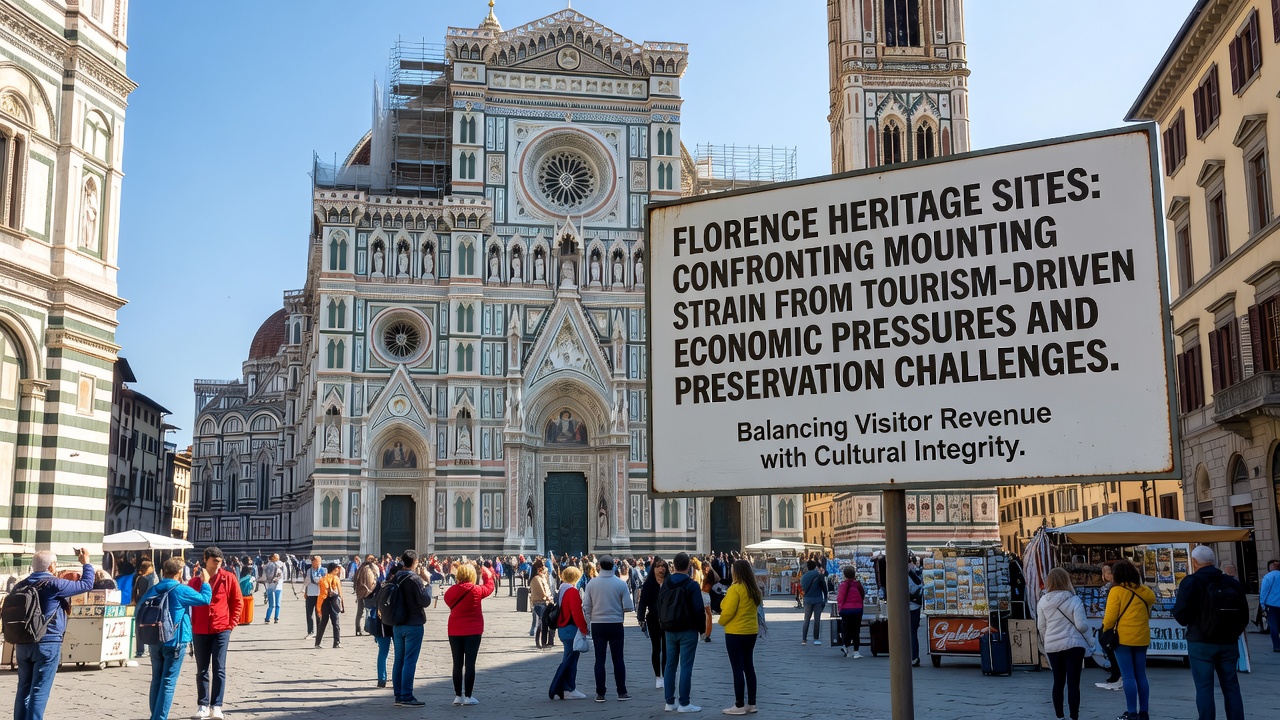
Florence Heritage Sites Confront Mounting Strain From Tourism-Driven Economic Pressures and Preservation Challenges
Florence attracts millions of visitors each year, and this influx creates direct pressure on its UNESCO-listed historic center. Data from the Italian Ministry of Culture shows visitor numbers at major sites like the Uffizi Gallery and the Duomo climbed steadily through 2025, with projections indicating further increases by September 2026 when new seasonal access rules take effect.
Local authorities report that tourism revenue supports jobs in hospitality and retail, yet the same economic activity accelerates wear on stone facades, frescoes, and structural foundations. Researchers at the University of Florence documented measurable vibration damage along pedestrian routes near the Ponte Vecchio, where daily foot traffic exceeds capacity limits established in earlier conservation plans.
Tourism Volume and Economic Drivers
Official statistics released by the Tuscany Regional Government place annual visitors to Florence above 15 million in recent years, with peak months stretching from spring through early autumn. Hotel occupancy rates remain above 85 percent in central districts, and short-term rental platforms have converted thousands of residential units into accommodations. This shift reduces available housing stock while generating income that funds municipal services.
Business owners in the historic core rely on tourist spending, but the concentration of activity in a few blocks leads to overcrowding that affects both infrastructure and daily life for residents. Studies conducted by the European Commission on sustainable urban tourism highlight similar patterns in other heritage cities, where economic benefits must be balanced against long-term site integrity.
Preservation Challenges at Specific Sites
The Basilica di Santa Croce faces ongoing issues with humidity and salt crystallization on its marble surfaces, conditions worsened by the constant flow of tour groups inside the church. Restoration teams completed a multi-year cleaning project on the facade in 2024, yet monitoring sensors installed afterward record continued exposure to pollutants carried by visitor movement and vehicle emissions on adjacent streets.
At the Palazzo Vecchio, authorities implemented timed entry systems and capacity caps after structural assessments revealed stress on wooden ceilings and frescoed walls. Conservation specialists note that temperature fluctuations caused by large groups entering and exiting galleries accelerate pigment degradation, prompting the installation of new climate-control equipment funded partly through ticket surcharges.
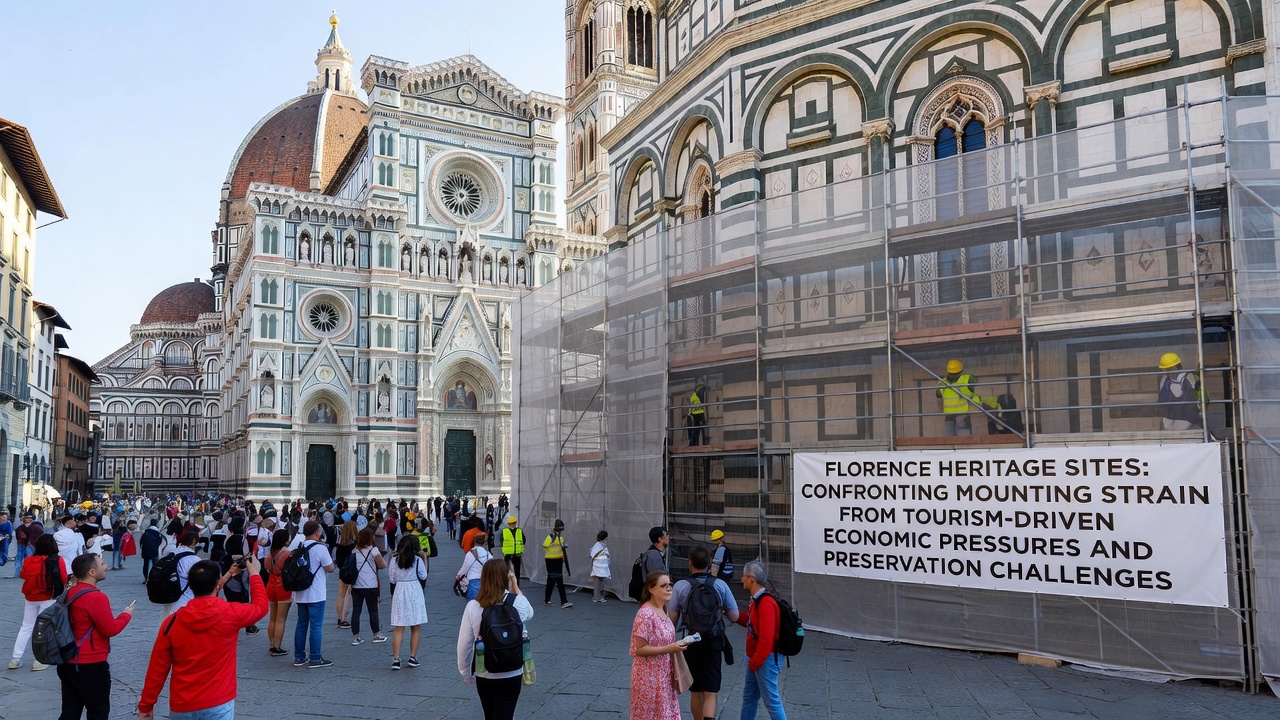
Experts from the Getty Conservation Institute collaborated with Italian teams on pilot projects that test protective coatings for outdoor sculptures, including those at the Piazza della Signoria. Results from these trials, published in 2025, indicate modest success in slowing surface erosion, although application remains limited by cost and the need for periodic re-treatment.
Policy Responses and Future Outlook
City officials announced in late 2025 that new visitor management measures will expand in September 2026, including expanded digital ticketing and restricted vehicle access zones around the historic center. These steps build on earlier experiments with timed reservations at the Accademia Gallery, where attendance data showed reduced wait times and lower peak-hour crowding after the system launched.
Funding for preservation draws from multiple sources, including regional heritage grants and revenue from museum admissions. The Italian government allocated additional resources in its 2025 budget for monitoring equipment at high-risk locations, while private foundations contribute to specific restoration campaigns. Observers note that coordination between national agencies and local administrators determines how effectively these funds address the most urgent structural concerns.
Conclusion
Florence continues to manage the intersection of heritage protection and tourism economics through a combination of regulatory adjustments, technological monitoring, and targeted conservation work. Figures from ongoing studies reveal that sustained investment and adaptive policies remain central to maintaining the physical condition of sites while supporting the economic activity that surrounds them. As September 2026 approaches, updates to access protocols will provide further data on whether these approaches can keep pace with visitor demand.